
Before you order your hardwood flooring, there is one decision that most buyers overlook until the installation day: underlayment. Choose the wrong type, use it where it does not belong, or skip it where it is required, and you will spend the next decade living with squeaks, moisture damage, or a floor that moves underfoot. Choose correctly, and you will never think about it again. This guide covers what underlayment actually does, which type matches your installation method, and the mistakes that are expensive to fix after the fact. For a full overview of the hardwood buying process, start with the complete hardwood flooring guide at Flooring.org.
What Underlayment Actually Does
Underlayment is the material installed between your subfloor and your hardwood flooring. Depending on the product and the installation environment, it serves up to three functions, and understanding which of those functions you actually need is the key to choosing correctly.
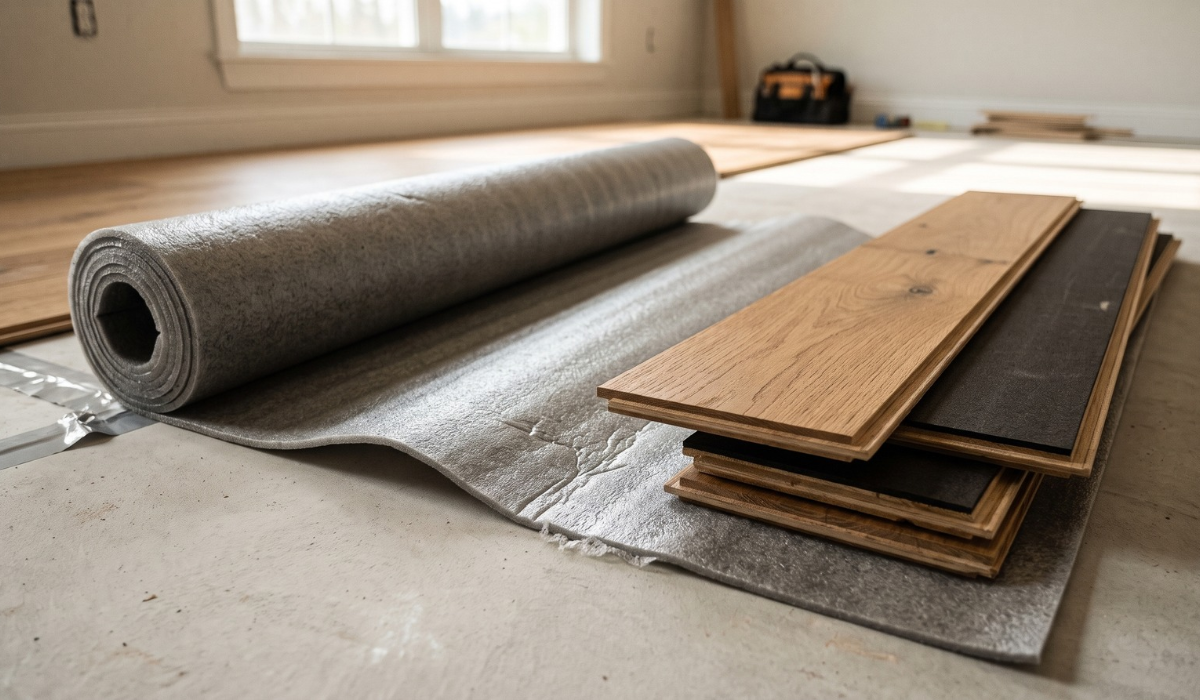
Moisture Barrier
Moisture is the primary threat to hardwood flooring, and it comes from below as often as it comes from above. Concrete subfloors in particular release vapor continuously; even slabs that appear dry can emit enough moisture to cause solid hardwood to swell, cup, or delaminate over time. A moisture-barrier underlayment or a dedicated vapor retarder interrupts that transfer before it reaches the wood.
Over wood subfloors, plywood or OSB above a ventilated crawlspace, moisture management is less critical, but it is still worth considering in humid climates or ground-level installations. Over concrete, it is not optional. Any hardwood installation directly over concrete requires either a moisture-barrier underlayment or a separately applied vapor retarder. This applies to both floating and glue-down installations; the form of the barrier changes by method, but the requirement does not.
Sound Dampening
Floating hardwood, engineered click-lock planks that are not nailed or glued to the subfloor, produces impact noise as you walk. The floor moves slightly underfoot and transmits that movement as sound through the subfloor and into the structure below. A foam, cork, or combination underlayment absorbs that impact before it transfers, reducing the hollow, clattery sound that floating installations can produce without it.
Sound dampening is most valuable in multi-story homes where flooring noise travels to rooms below, and in condominiums where the subfloor and joists are shared with neighbors. If your installation is on a concrete slab at ground level, or over a crawlspace with no living space below, the acoustic benefit is minimal, but the product still contributes to comfort underfoot.
Minor Subfloor Leveling
Foam and cork underlayment products compress slightly under load, which allows them to bridge minor surface irregularities in the subfloor. This is not a substitute for proper subfloor preparation, the National Wood Flooring Association (NWFA) specifies that subfloors must be flat to within 3/16 inch over a 10-foot span regardless of what goes over them. Underlayment cannot correct a subfloor that falls outside that tolerance. What it can do is smooth out the texture of a rough subfloor surface and prevent small high points from telegraphing through thinner flooring products.
Underlayment by Installation Method
The single most important thing to understand about underlayment is that the right product is determined by installation method first. Using the wrong underlayment type for your installation method is one of the most common and costly hardwood flooring mistakes, and it is almost always made because the buyer chose a product based on its features without considering whether those features are compatible with how the floor is being installed.
Floating / Click-Lock Installations
Floating engineered hardwood is the installation method where underlayment plays the most significant role. The floor is not mechanically fastened to the subfloor; it is held in place by its own weight and perimeter moldings. Underlayment provides cushioning, sound absorption, and moisture protection in a single product layer.
Three underlayment types are appropriate for floating installations:
- Foam underlayment (polyethylene or polyurethane) is the standard entry-level product. It is inexpensive, lightweight, and easy to install. Basic foam provides cushion and a minimal moisture barrier. Thicker foam provides more compression, which improves acoustic performance but can create excessive flex if overdone; more on that in the mistakes section below.
- Cork underlayment is a natural, renewable product that provides superior acoustic performance compared to basic foam. It is denser, compresses less over time, and handles impact noise more effectively. Cork is the preferred choice in condominiums, multi-story homes, and any installation where sound transmission is a concern. It is also naturally resistant to mold and mildew.
- Combination underlayment products laminate a foam or cork layer to an integrated vapor barrier film in a single sheet. These are the most convenient option for concrete subfloor installations because they provide moisture protection and acoustic performance without requiring a separately installed vapor retarder underneath.
Many engineered hardwood products now come with underlayment pre-attached to the back of the planks. If yours does, do not add a second layer underneath; the combined thickness creates excessive flex and can cause click-lock joints to separate under load. Check your product specifications before purchasing a separate underlayment.
For a full comparison of floating and other installation methods, including how installation method affects product selection, see our guide to nail-down and floating installation methods.
Glue-Down Installations
Glue-down hardwood, most commonly engineered hardwood adhered directly to a concrete subfloor with flooring adhesive, requires either no underlayment or a very thin acoustic mat, depending on the product and manufacturer specifications.
Standard foam underlayment is not compatible with glue-down installations. The adhesive bonds the flooring to the subfloor; a compressible foam layer between them prevents the adhesive from achieving a solid bond and creates a surface that flexes, which causes the adhesive to fail over time. The result is a floor that separates, bubbles, or produces hollow spots underfoot.
The moisture barrier in a glue-down installation is handled differently. Over concrete, a separate moisture mitigation system, typically an applied liquid membrane or a moisture-barrier adhesive, is used before the flooring adhesive goes down. This addresses the vapor transfer issue without introducing a compressible layer. Always confirm moisture mitigation requirements with your flooring manufacturer before ordering, since moisture tolerances vary by product.
Engineered hardwood over concrete is discussed in detail in our engineered hardwood over concrete comparison guide.
Nail-Down Installations
Nail-down solid hardwood over a wood subfloor uses one specific underlayment product and one only: red rosin paper. This is a moisture-resistant kraft paper that goes directly over the subfloor before the flooring is nailed down. It reduces minor subfloor noise, provides a minimal moisture buffer, and allows the floor to slide slightly during installation.
That is the entire product. No foam. No cork. No combination underlayment. This is the point where the most expensive underlayment mistakes are made, and it is worth being direct about it: foam under a nail-down solid hardwood installation is a critical error. Solid hardwood installed over foam has nowhere solid to anchor the cleats. The floor will compress slightly under foot traffic, the cleats will work loose over time, and the floor will squeak, sometimes within months of installation. Foam is designed for floating installations where the floor is not mechanically fastened. Under nail-down hardwood, it creates exactly the problem it is supposed to prevent in a floating installation.
Common Underlayment Mistakes and How to Avoid Them
Foam Under a Nail-Down Installation
As covered above, this is the most consequential underlayment mistake because it is irreversible without pulling up the floor. The correct underlayment for nail-down solid hardwood is red rosin paper, full stop. If a supplier, installer, or online resource suggests foam under a nail-down installation, that is incorrect advice. Verify with your flooring manufacturer and with NWFA installation guidelines before proceeding.
Skipping Underlayment Over Concrete
Concrete releases moisture vapor continuously, and that vapor will find the path of least resistance, which is into your flooring from below. A floating installation over concrete without a moisture barrier or combination underlayment is not a question of whether moisture damage will occur, but when. In humid climates or in below-grade installations, the timeline shortens considerably. The moisture barrier step is not optional over concrete, regardless of how dry the slab appears at installation time.
Doubling Underlayment Layers
More cushion is not better. A floating floor needs a firm, stable foundation. Stacking two layers of foam, or using an underlayment that is thicker than your flooring manufacturer recommends, creates excessive flex underfoot. That flex puts stress on the click-lock joints with every step, and those joints are engineered to handle vertical compression, not repeated lateral stress from an unstable base. Over time, doubled or oversized underlayment causes joint separation, gaps between planks, and squeaking, the same symptoms people use underlayment to prevent. Follow the manufacturer’s recommended underlayment thickness and use one layer only.
Using Underlayment Under Pre-Attached Products
Many engineered hardwood products now include an attached underlayment pad bonded to the bottom of each plank at the factory. Installing a separate underlayment beneath a product that already has one compounds the thickness problem described above. Always check the product specifications before purchasing separate underlayment, if the planks have an attached pad, you do not need anything additional.
Quick Reference: Underlayment by Installation Type
| Installation Method | Correct Underlayment | Do Not Use |
|---|---|---|
| Floating / Click-Lock | Foam, cork, or combination (foam + vapor barrier). One layer only. Check for pre-attached pad first. | Two layers stacked; oversized thickness |
| Glue-Down | None, or a thin acoustic mat per manufacturer specs. Moisture mitigation handled by adhesive or applied membrane. | Standard foam underlayment |
| Nail-Down | Red rosin paper only. | Foam, cork, or any compressible underlayment |
Frequently Asked Questions
Do I need underlayment for hardwood floors?
It depends on the installation method. Floating / click-lock installations require underlayment for sound dampening and moisture protection. Nail-down installations use red rosin paper, which is technically a form of underlayment. Glue-down installations typically use no underlayment; moisture management is handled by the adhesive system. The short answer is: yes for floating, red rosin paper for nail-down, no standard underlayment for glue-down.
What is the best underlayment for hardwood floors?
For floating engineered hardwood over a wood subfloor, standard foam underlayment is sufficient and cost-effective. Over concrete, use a combination underlayment with an integrated vapor barrier, or install a separate vapor retarder first. For the best acoustic performance, especially in condominiums or multi-story homes, cork underlayment reduces impact noise more effectively than foam. The best underlayment is the one that is compatible with your installation method, your subfloor, and your product’s manufacturer specifications.
Can I use foam underlayment under solid hardwood?
No. Foam underlayment should not be used under nail-down solid hardwood installations. The foam prevents the flooring cleats from anchoring securely to the subfloor, which causes squeaking and joint failure over time. The correct underlayment for nail-down solid hardwood is red rosin paper.
How thick should hardwood floor underlayment be?
Follow your flooring manufacturer’s recommendation. Most floating installations specify underlayment between 1mm and 3mm in thickness. Thicker is not better, too much compression underfoot puts stress on click-lock joints. If your flooring has a pre-attached underlayment pad, do not add an additional layer underneath.
Do I need underlayment over concrete for hardwood flooring?
Yes, moisture management is essential over concrete for any hardwood installation. For floating engineered hardwood, use a combination underlayment with an integrated vapor barrier, or install a polyethylene vapor retarder (6 mil minimum) before laying underlayment. For glue-down installations, use a moisture-mitigating adhesive or an applied liquid membrane system before the flooring adhesive. Never install hardwood directly over untreated concrete without addressing moisture first.
Ready to move forward with your hardwood project? Browse Flooring.org’s full selection of engineered and solid hardwood at wholesale pricing, or read the complete buying guide to make sure you have everything covered before you order.